


Core drilling — clean round penetrations
We drill clean.

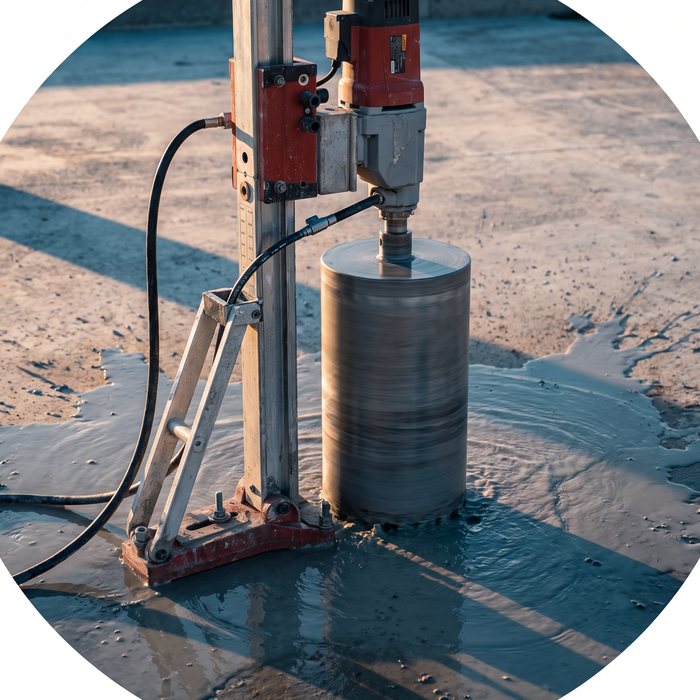
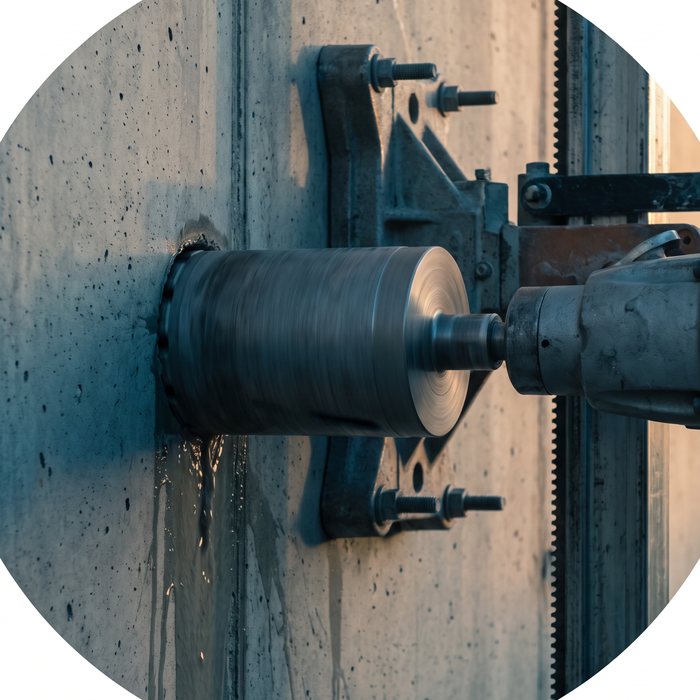
Rig-mounted diamond core drills make precise round holes through floors, walls and ceilings — for plumbing, electrical, HVAC, anchors and dowels — with minimal dust and disruption.
What comes out
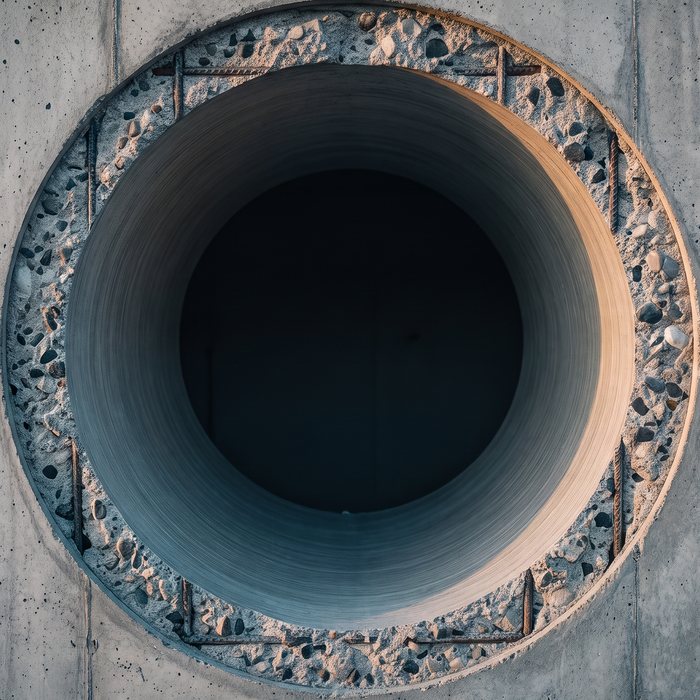
Every core tells the slab's story.

- Finished surface
- Smooth drilled wall — no impact cracks
- Sliced aggregate
- Rebar, cut flush
How it goes
Anchor. Drill. Done.
What core drilling is
A core drill turns a hollow diamond-tipped barrel through the concrete, removing a solid cylinder and leaving a smooth, exact-diameter hole. Because it's a rotary cut rather than an impact, it doesn't crack the surrounding concrete.
Typical jobs
- Plumbing and drain lines
- Electrical and data conduit
- HVAC and vent penetrations
- Anchor bolts and dowel holes
- Sample cores for testing
- Railing and post holes
How NoCo does it
Scan first, mark the centre, anchor the rig, drill wet to depth, remove the core and leave a clean hole. Angled cores and stacked holes for larger openings are routine.
Every job starts with a scan
Every NoCo job starts the same way. We scan the slab or wall with ground penetrating radar to map rebar, post-tension cables, conduit and voids. Then we choose the right tool — a track-mounted wall saw for openings, a rig-mounted core drill for round penetrations, a walk-behind flat saw for slabs and pavement — and cut once, straight and to depth. When we open something up, our pour-back service can close it again with concrete matched to the surrounding grade and finish.
Who we work for
General contractors and builders who need openings cut on schedule. Plumbers, electricians and HVAC contractors who need clean penetrations without collateral damage. Property owners and managers modifying an existing building. Homeowners adding a basement window or a new door. Municipal and commercial crews cutting roads and slabs. Residential or commercial, one hole or a whole floor — the standard is the same.
Where we work
Fort Collins, Loveland, Greeley, Windsor, Longmont, Denver and the surrounding Northern Colorado communities, plus projects across Wyoming. If you're not sure you're in range, ask — we travel for the right job.
Ask us about door and window openings, HVAC and plumbing penetrations, stair and elevator openings, expansion joints, trenching for utilities, slab removals and pour backs.
Planning your job
Planning your job.
The questions to settle before the crew arrives — so the day runs clean.
- Scan documentationWhat you receive after a GPR scan — details coming soon.
- Slurry & debrisHow cutting slurry and debris are handled — details coming soon.
- Removal & haul-offWhether removal and haul-off are included — details coming soon.
- Access, water & powerWhat the crew needs on site — details coming soon.
Not sure yet? Ask when you request a quote.
Common questions
Answers before you call.
What sizes?
From small pilot holes to large-diameter cores; tell us the pipe or duct size and we'll size the bit.
Can you drill overhead?
Yes, with the rig anchored and water managed.
Other services

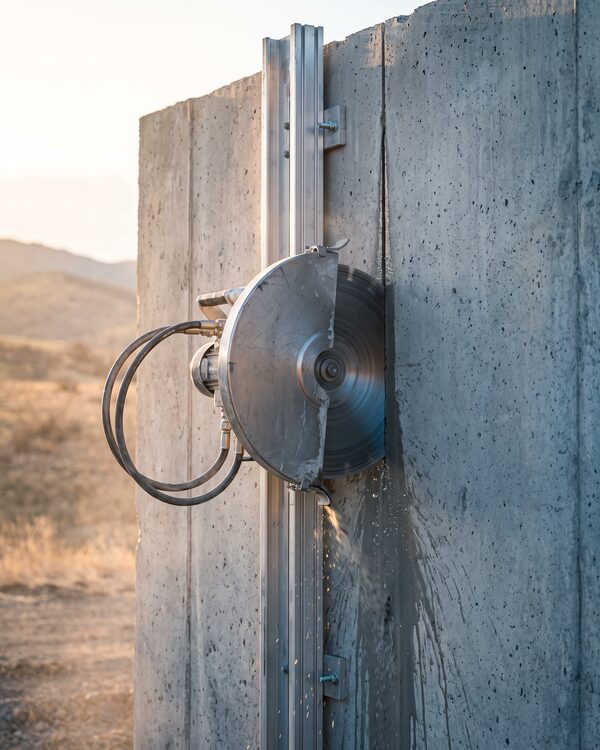
Wall Sawing
Precision wall sawing for door and window openings, expansions and structural modifications of any size.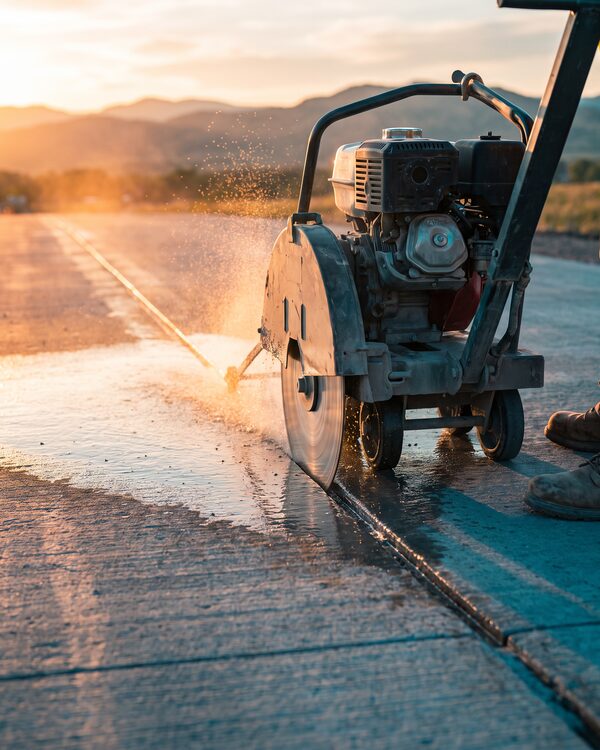
Flat Sawing
Efficient flat sawing for roads, slabs and large surface areas with minimal disruption.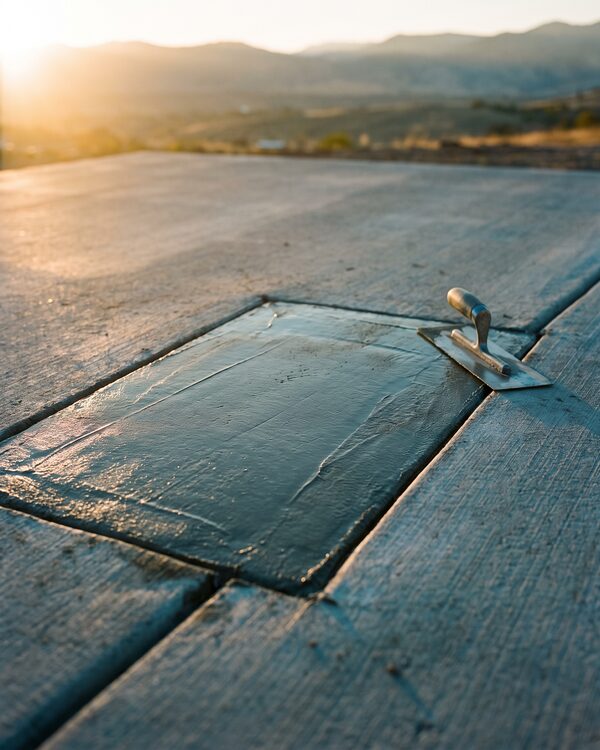
Pour Backs
After the cut, we make it whole: openings and trenches restored with concrete matched to grade and finish.


Ready to get your project cut right?
Tell us what you're working on and we'll put together a clear, upfront quote — no surprises.
cut scan solve repeat